Land changes. Stories remain.A LANDSCAPE OF MEMORY / 01
An imagined landscape, not a historical view.
THE BLANCKENSEE STORYEARLY MENTIONS — LIVING MEMORYSCROLL TO EXPLORE ↓
01 / Tracing the beginnings
Before the tree, there were traces.
Perhaps before1234?
A suggestion in the old genealogies, not a confirmed starting date.
Every family story begins somewhere. This one points to lands west of the Elbe.
According to a family history last updated in Germany in 1938, older genealogies suggest the Blanckensee name may reach back beyond 1234. The same account places its possible origins west of the Elbe river.
These are clues, rather than a complete line of descent. The written family tree begins later, in 1333.
West of the Elbe A possible beginning, as described in the family account.
02 / A name on the page
Ink becomes an inheritance.
Before a continuous family tree, individual names appear as witnesses and in monastic records.
An illustration of a record, not a reproduction of a family document.
An early mention DATE UNSPECIFIED
Aluericus de Blanckensee
The family account mentions Aluericus, also rendered as Alverish, in a Latin document at a monastery in Lehnin. The supplied excerpt gives no date for this record.
1253
A witness to history
Wasmusdus de Blanckensee is named as a witness in a Hessian document, according to the family account.
1333 THE WRITTEN TREE
A line we can follow
The written family tree is traced to 1333. Gyso von Blanckensee is first mentioned in that year and is later recorded as a witness in a document in 1370.
03 / Places that held the name
The land holds another chapter.
For generations, estates formed part of the family story. Their names remain, even as ownership and use have changed.
01 / SCHLAGENTHIN
Early 1300s — 1796
Schlagenthin
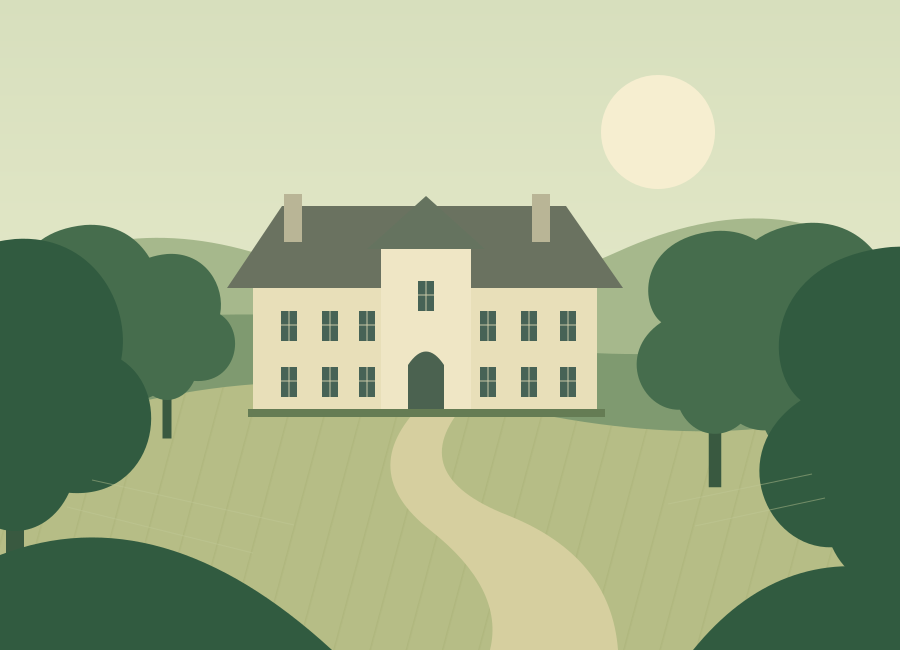
The family account describes Schlagenthin as a family estate from the early 1300s until 1796. It was once owned by Gyso von Blanckensee.
Follow the connection +
Gyso is first mentioned in 1333, the starting year given for the written family tree, and appears as a witness in 1370. The excerpt does not give an exact date for his ownership of the estate.
02 / ZIPKOW
1790s — 1945
Zipkow
Zipkow was in the family from the 1790s until 1945. The supplied account places it about 80 kilometres east of present-day Słupsk, near Poland's Baltic coast.
A changing landscape +
The supplied account describes the former estate as now used as a pig farm. This present-day description has not been independently verified. It also recalls other family estates in Prussia, between Słupsk and present-day Gdańsk.
The estate images are original, imagined illustrations. They do not depict the actual properties.
SCHLAGENTHIN—ZIPKOW—THE BALTIC COAST
04 / Beyond dates and places
A story doesn't end. It is carried forward.
Documents preserve names. Landscapes preserve traces. Sharing the family account keeps both in view, while leaving room for what is still to be discovered.
✳
About this telling
This page is based on a family-history excerpt supplied by the site owner, referring to a family history last updated in Germany in 1938. The original volume and documents have not been consulted or independently verified for this site.
Dates, name spellings, locations, and descriptions of present-day use follow that excerpt. Earlier mentions are not presented as proof of a continuous line of descent. Illustrations are interpretive, not archival images or a family coat of arms.
 blanckensee


 01 / SCHLAGENTHIN